ARC
A language-learning experience built around real-world capability, not daily streaks.
The idea
Most language apps reward showing up.
ARC rewards what you can now do.
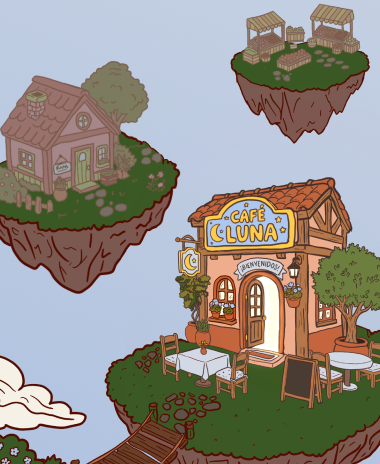
Learners unlock small "worlds" each one ending in a real skill, not a score.
The Framework
Discover → Preview → Prove → Expand
Turns ability into felt progress.
Built for language learning, not limited to it.
Built for language learning, not limited to it.
The system
One loop, four moments
Designed to generalize beyond language: any skill where progress is hard to feel day-to-day.
Discover →
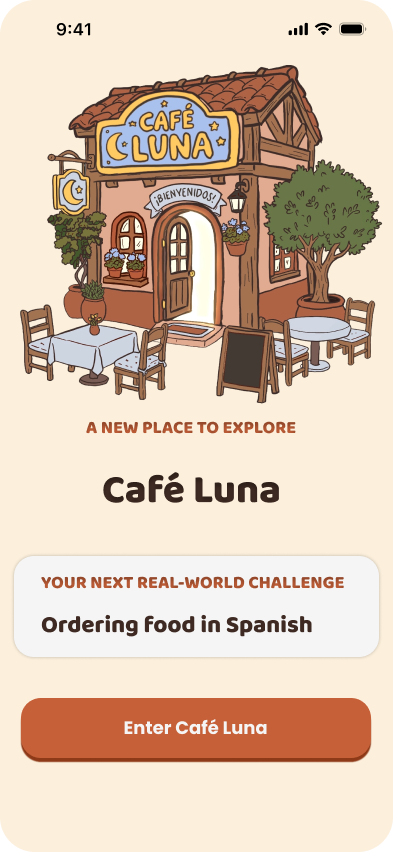
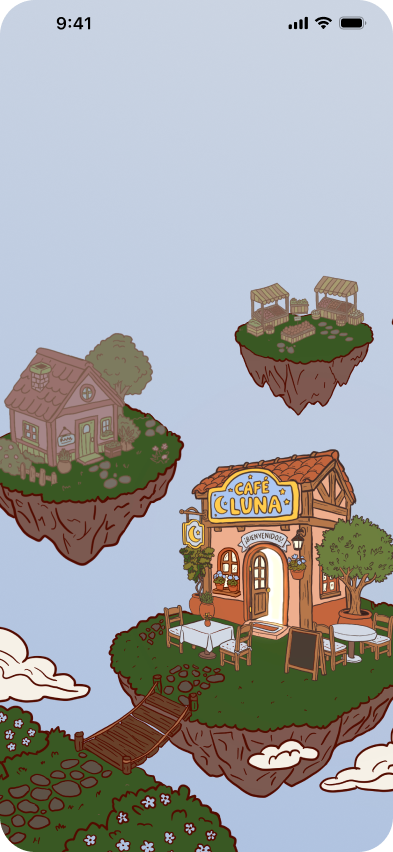
A new place opens

Preview →
You'll practice: ordering, asking, responding
%20copy.png)
Prove →
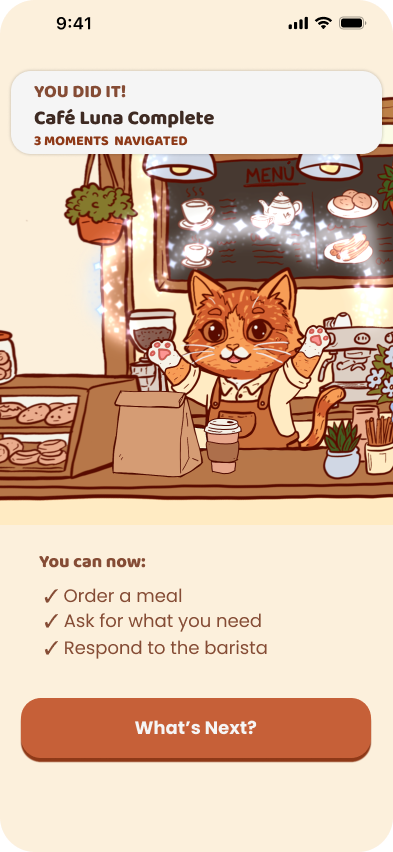
3 moments navigated

Expand
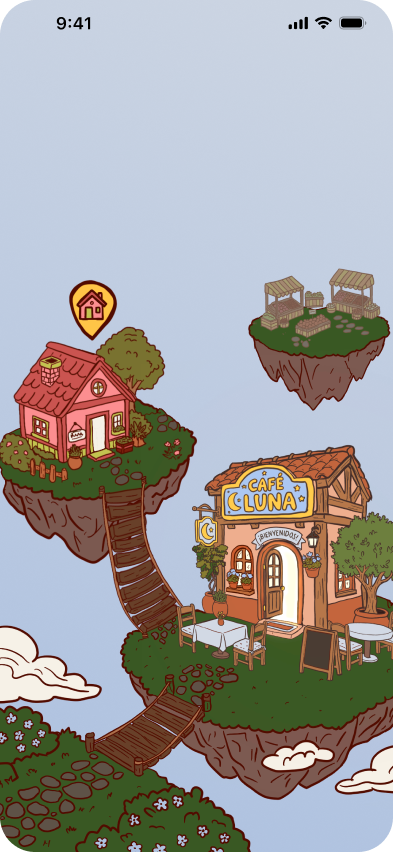
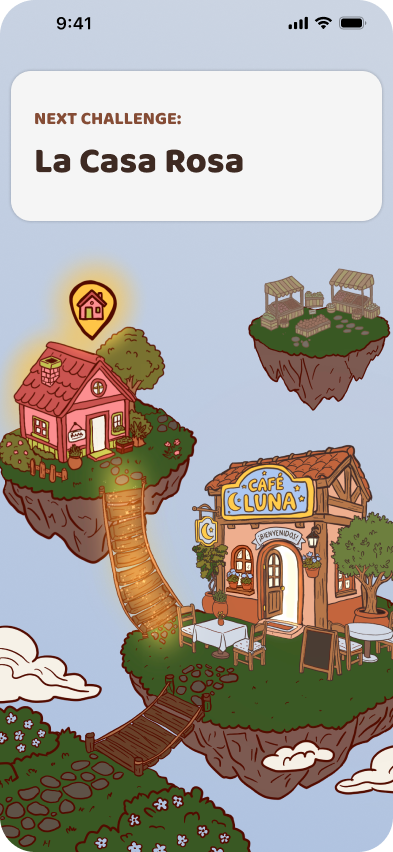
The bridge extends

The Product
Café Luna, start to finish.
Capability-first but never gamification-free.
The tension that shaped every decision below.
The tension that shaped every decision below.
.png)
Key Design Decisions
Five screens, seven decisions
01 — Discovery Framing, Not Completion Framing
"A new place is opening..." progress framed as entering a place, not finishing a unit.
"A new place is opening..." progress framed as entering a place, not finishing a unit.
02 — Progressive Complexity Without Gating
The "You'll practice" checklist states real-world capabilities before simulation starts. Nothing is locked behind a paywall or level requirement.
The "You'll practice" checklist states real-world capabilities before simulation starts. Nothing is locked behind a paywall or level requirement.
03 — Simulation as Default Review
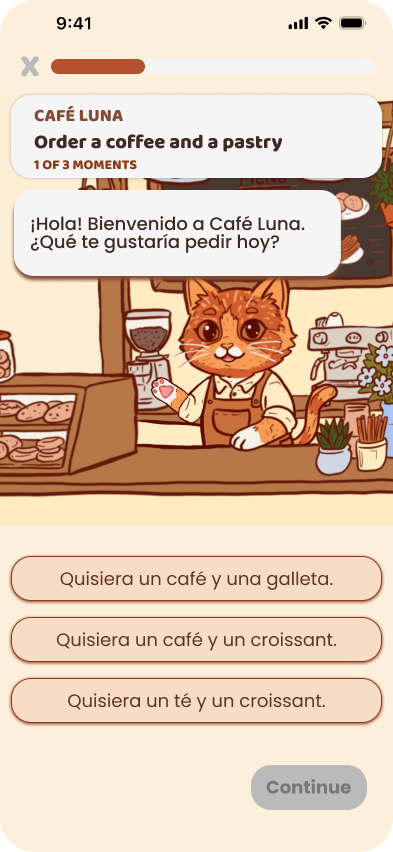
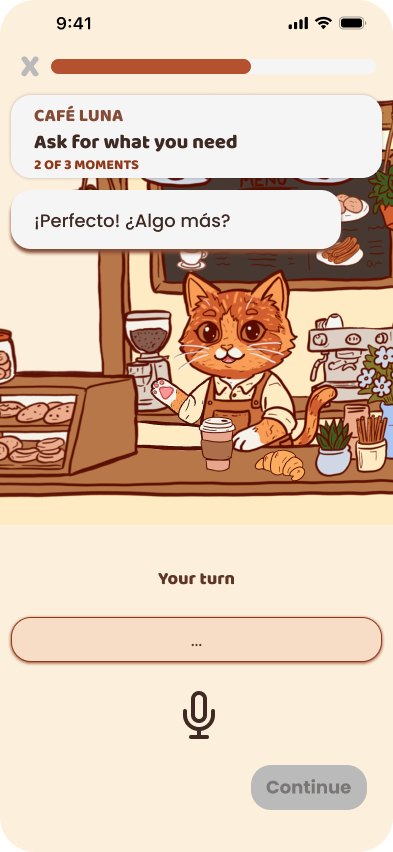
"1 of 3 moments" replaces drilling as the core review mechanic, not a bonus mode after vocabulary practice.
"1 of 3 moments" replaces drilling as the core review mechanic, not a bonus mode after vocabulary practice.
04 — Deliberate Session Pacing
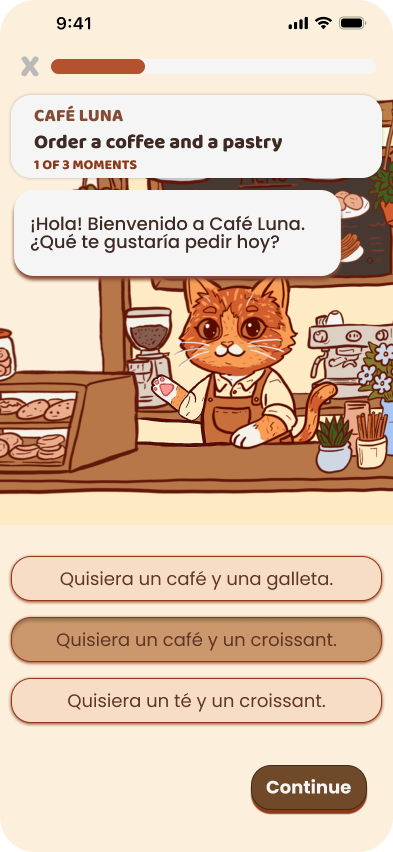
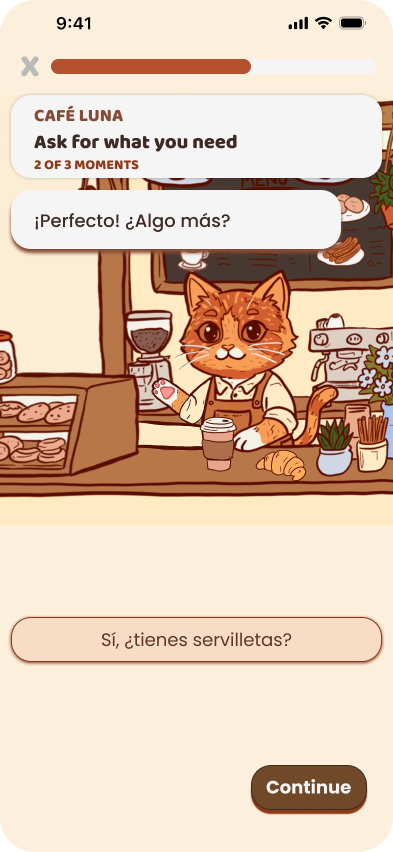
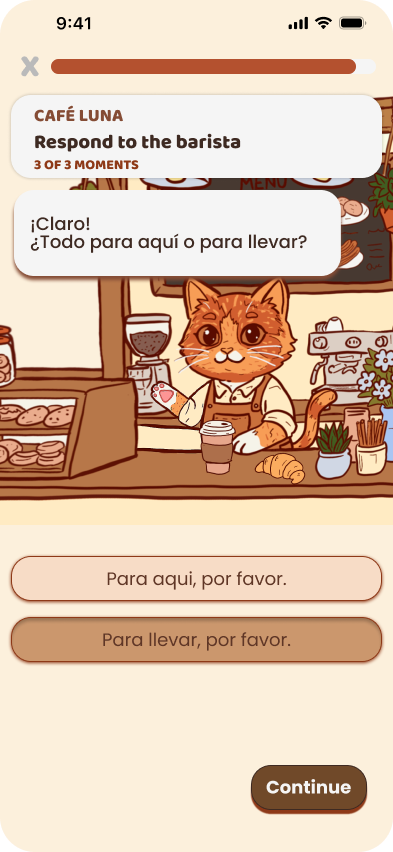
The continue button stays disabled until a choice is made. Three dense moments, not an unlimited quiz queue.
The continue button stays disabled until a choice is made. Three dense moments, not an unlimited quiz queue.
05 — Button Hierarchy
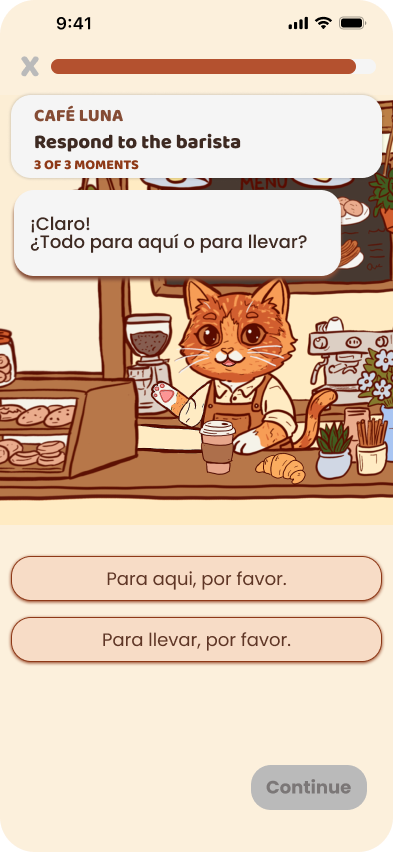
Outline for choice, solid for confirm, full-width for commit. A visual hierarchy that makes the next tap obvious without instructions.
Outline for choice, solid for confirm, full-width for commit. A visual hierarchy that makes the next tap obvious without instructions.
06 — Capability-Based Feedback
"You can now.." leads the screen. Accuracy score is secondary evidence, not the headline.
"You can now.." leads the screen. Accuracy score is secondary evidence, not the headline.
07 — Spatial, Cumulative Progression
The bridge extends toward the next location. Progression is spatial and cumulative. You're building a world, not maintaining a streak.
The bridge extends toward the next location. Progression is spatial and cumulative. You're building a world, not maintaining a streak.
The Challenge
How do you make progress feel real without just replacing one gamified pressure with another?
the insight
Streak systems measure attendance. They don't measure whether you can actually use what you learned.
"I feel like I'm maintaining an app, not developing a skill."
The bet: if progress is framed as capability, learners feel it more and stick with it longer.
Testing the Concept
Tested with 6 learners at different levels of engagement, including one on a 413-day Duolingo streak.
What landed
- "Moments Navigated" read as real conversations, not lesson labels
- "Restaurant Ready" read as genuine preparedness, not a badge
- The simulation felt different from a conventional lesson
What didn't
- No celebration. No anticipation. No dopamine.
- Participants understood the value, but didn't feel rewarded.
- The most engaged participant, the one with the longest streak, noticed this fastest.
The finding
Meaningful progress ≠
automatically motivating progress.
automatically motivating progress.
This became the most important insight in the project and the one that shaped everything after it.
"I can communicate with our dishwashers at work who barely speak any English. Last year I couldn't say much outside of 'hola, cómo estás.' Now we have little conversations."
She didn't reach for her streak to describe her growth. She reached for a real conversation.
the design response
Keep the game loop.
Change what it rewards.
Change what it rewards.
Streak systems
- Protect what you've maintained
- Days shown up
- Linear lesson path
ARC
- Unlock what you can explore next
- Skills gained
- Spatial, cumulative world map
The world map adds anticipation and curiosity. The capability reveal makes progress concrete. Neither one alone was enough. Together, they close the gap the testing surfaced.
Reflection
Discover → Preview → Prove → Expand held up across three learner tests, including someone 413 days into a Duolingo streak.
Whether it changes self-perception, or just changes what gets measured, is the open question for the next round.